
Protective effects of Shati/Nat8l on Aβ neurotoxicity in the cultured Neuro-2a cells
M. Takakuwa1, N. Izuo1,2, Y. Yano1, J. Yokose1, A. Nitta1
1University of Toyama, Department of Pharmaceutical Therapy & Neuropharmacology, Faculty of Pharmaceutical Sciences, Toyama City, Japan, 2University of Tokyo, Research Center for Advanced Science and Technology, Meguro City, Japan
Background: In Alzheimer's disease (AD), the accumulation of senile plaques composed of neurotoxic amyloid β (Aβ) is known to precede other pathological findings. Shati/Nat8l was found as a gene related to neuropsychiatric disorders and is the enzyme that biosynthesizes N-acetyl aspartate (NAA) from aspartate and acetyl CoA. Experiments with human patients and mice have indicated that NAA and Shati/Nat8l are associated with AD. We have shown that hippocampal-specific overexpression of Shati/Nat8l in Alzheimer's disease mice models improved cognitive decline without altering the number or size of Aβ plaques.
Aims & Objectives: In this study, we aimed to investigate the underlying cellular mechanisms by which Shati/Nat8l demonstrates neuroprotective effects against Aβ neurotoxicity.
Method: We generated the vector containing full-length Shati/Nat8l sequences and transfected it into Neuro-2a cells to establish Shati/Nat8l-overexpressing cell lines.
Results: In Shati/Nat8l-overexpressing cell line, the mRNA level was 3-fold compared to control-line cells. The cell lines were treated with Aβ (0-10 μM, 48 h) and assessed with MTT assay, and reductions in cell viability were observed at Aβ concentrations ≥ 0.03 µM in both cell lines. After treatment with Aβ (0.03 μM, 24 h), Shati/Nat8l-overexpressing cell line had higher mitochondrial membrane potential. In addition, pyruvate dehydrogenase kinase 1 (Pdk1) mRNA expression was downregulated, and nuclear respiratory factor 1 (Nrf1) and mitochondrial transcription factor A (Tfam) mRNA expression were upregulated in Shati/Nat8l-overexpressing cell line. These results suggested that increased expression of Shati/Nat8l could have rescued Aβ-induced cognitive impairment via enhanced mitochondrial function related to cellular metabolism and mitochondrial DNA.
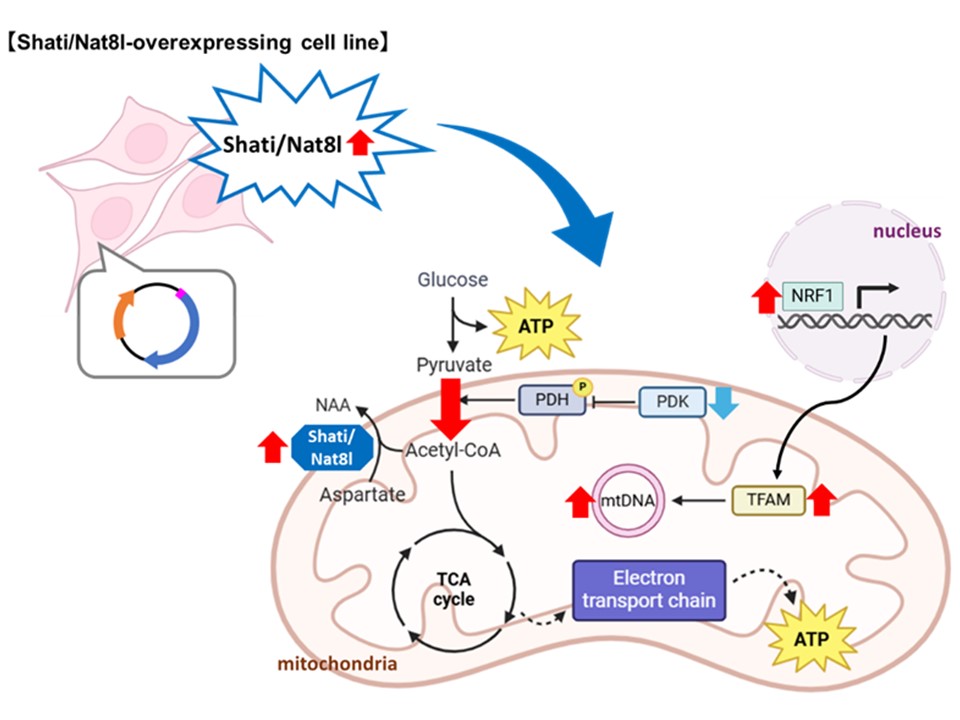
Discussion & Conclusions: In this study, we succeeded in producing full-length Shati/Nat8l-overexpressing cell lines that had neuroprotective effects on the Aβ neurotoxicity.
In sessions