
Plasma Neurofilament Light and Glial Fibrillary Acidic Protein are Elevated in Bipolar Disorder: Evidence for Neuroprogression and Astrogliosis
M. Kang1,2, D. Eratne1,2, O. Dean3, M. Berk3, P. Mitchell4, M. Hopwood2,5, D. Velakoulis1,2, The MiND Study Group
1The Royal Melbourne Hospital, Neuropsychiatry Centre, Melbourne, Australia, 2The University of Melbourne, Department of Psychiatry, Melbourne, Australia, 3Deakin University, The Institute for Mental and Physical Health and Clinical Translation (IMPACT), Geelong, Australia, 4University of New South Wales, Discipline of Psychiatry and Mental Health, School of Clinical Medicine, Faculty of Medicine and Health, Sydney, Australia, 5Ramsay Clinic Albert Road, Professorial Unit, Melbourne, Australia
Background: Recent developments have enabled us to measure small amounts of brain-specific proteins in the blood, including neurofilament light chain (NfL), a marker of axonal pathology, and glial fibrillary acidic protein (GFAP), a marker of astrocytic activation. In our recent systematic review and meta-analysis of 29 studies, we found that NfL was elevated in individuals with bipolar disorder compared to healthy controls, presented at CINP2024. To build on this finding, we explored the associations between clinical correlates and NfL in a cohort of individuals with bipolar disorder.
Aims & Objectives: We aimed to explore the relationships between biomarkers of neuronal injury (NfL) and astrogliosis (GFAP) with clinical and demographic factors in bipolar disorder to better understand what illness-related factors are associated with higher levels.
Method: This study analysed plasma NfL and GFAP measured in 216 individuals using Simoa, an ultrasensitive technology to detect small quantities of brain matter in blood. We used bootstrapped general linear models (GLM) to compare plasma NfL and GFAP levels between people with bipolar depression (n = 120) and healthy controls (n = 96), adjusting for age, sex, and weight. We examined associations between these biomarkers and clinical variables while adjusting for multiple comparisons. For sensitivity analyses, predictors were also evaluated using Bayesian model averaging (BMA) to ensure our findings were robust.
Results: Plasma GFAP (β=0.21 [0.07, 0.35], p=0.006) and NfL (β=0.06 [0.01, 0.10], p=0.028) were elevated in people with bipolar depression. Illness duration was positively associated with NfL (r = 2.97, p = 0.002), and further supported by BMA analysis (Figure 1). Age of onset was positively associated with GFAP (r = 0.246 p = 0.041), which was also supported by BMA analysis.
Figure 1 - BMA Analysis for each predictor of plasma NfL
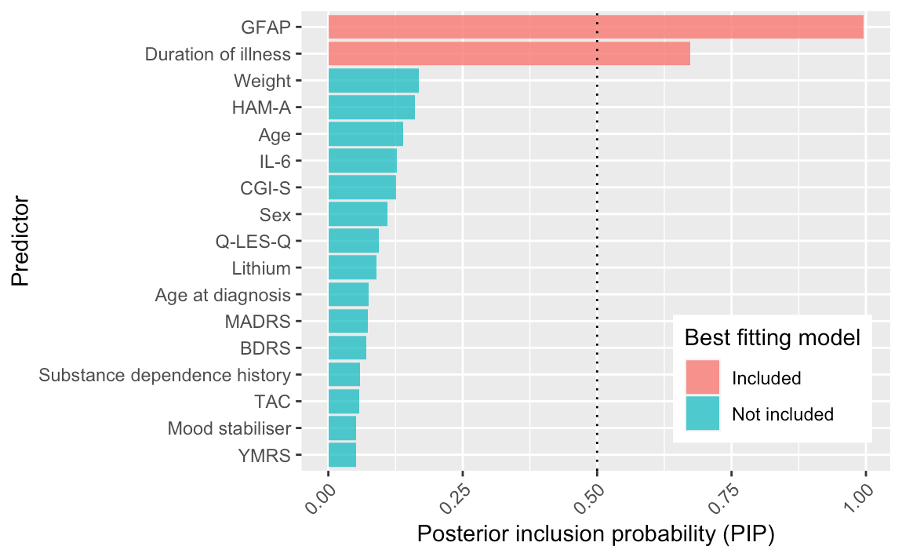
Figure 1 - BMA Analysis for each predictor of plasma NfL
Discussion & Conclusions: We found elevated levels of plasma NfL and GFAP in individuals with bipolar, with significant associations with the duration of illness and age of onset. These findings suggest a degree of neuronal injury and astrocytic dysfunction in bipolar depression. Our study highlights the potential for these novel biomarkers to reflect specific stages or progression of bipolar illness, including neuroprogression. These offer novel treatment targets for bipolar disorder.
In sessions